Blog
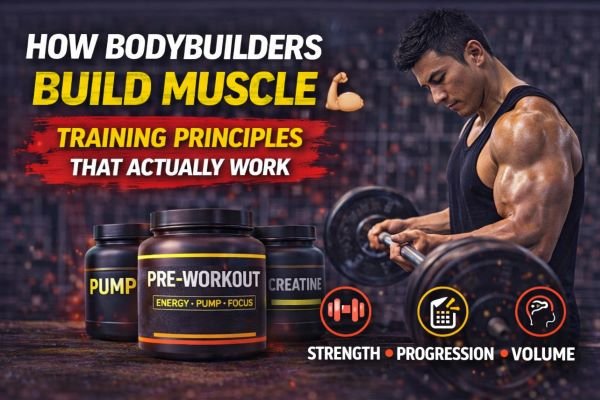
How Bodybuilders Build Muscle: Training Principles That Actually Work 💪

Quick Summary (Key Takeaways)
• Bodybuilders build muscle through consistent resistance training, progressive overload, and proper nutrition.
• Muscle development occurs when muscles are challenged, recover, and adapt over time.
• Key training principles include progressive overload, volume, intensity, time under tension, and recovery.
• Proper hydration, sleep, and balanced nutrition support overall training performance.
• Strategic supplement use may complement training routines designed for strength and muscle development.
• Consistency over time is the most important factor for building muscle effectively.
How Bodybuilders Build Muscle: Training Principles That Actually Work
Bodybuilding is both a science and a discipline. While impressive physiques may look effortless on stage or in the gym, the process of building muscle requires dedication, planning, and a clear understanding of how the body responds to resistance training.
For decades, strength coaches, exercise scientists, and athletes have studied the most effective ways to stimulate muscle development. Although training styles vary, most successful bodybuilders follow several fundamental principles that consistently support muscular growth and performance.
Understanding these training principles can help athletes structure workouts more effectively and build muscle in a safe and sustainable way.
The Foundation of Muscle Development
Muscle development begins with resistance training, which places stress on muscle fibers. When muscles are challenged during exercise, small microscopic changes occur within the muscle tissue.
After training, the body repairs and adapts to these stresses. Over time, this process helps muscles become stronger and more capable of handling future training sessions.
This cycle—training, recovery, and adaptation—is the foundation of all strength and bodybuilding programs.
However, not all training produces the same results. Bodybuilders use specific methods to maximize muscular engagement and training efficiency.
Progressive Overload: The Core Principle of Muscle Growth
One of the most important concepts in bodybuilding is progressive overload.
Progressive overload means gradually increasing the demands placed on the muscles over time. If the muscles are exposed to the same level of training stress repeatedly, the body eventually adapts and progress slows.
To continue developing strength and muscle size, athletes must gradually increase training intensity.
Progressive overload can be achieved in several ways:
• Increasing weight lifted
• Increasing repetitions performed
• Increasing the number of sets
• Improving exercise control and technique
• Increasing training frequency
By slowly increasing the workload placed on muscles, athletes encourage the body to continue adapting and becoming stronger.

Training Volume: Why More Sets Matter
Training volume refers to the total amount of work performed during a workout. It is often calculated as:
Sets × Repetitions × Weight
Many bodybuilding programs emphasize moderate to high training volume because it increases the total time muscles spend under stress during workouts.
For example, a typical bodybuilding workout might include:
• 3–5 sets per exercise
• 8–12 repetitions per set
• Multiple exercises for each muscle group
Higher training volume allows athletes to stimulate muscle fibers more thoroughly while maintaining manageable weight loads.
Research in exercise science suggests that appropriate training volume plays a significant role in supporting muscular development over time.
Training Intensity and Load
While volume is important, training intensity also plays a critical role.
Intensity refers to how heavy the weight is relative to an athlete’s strength level.
Bodybuilders often combine multiple intensity ranges within their programs.
For example:
Heavy training days may include:
• 4–6 repetitions per set
Moderate hypertrophy training may include:
• 8–12 repetitions
Higher repetition pump-focused sets may include:
• 12–15+ repetitions
This variety ensures muscles experience different forms of stress and stimulation.
Combining these rep ranges allows bodybuilders to balance strength development with muscular endurance and control.
Time Under Tension
Another important factor in bodybuilding training is time under tension.
Time under tension refers to how long muscles remain engaged during each repetition and set.
When repetitions are performed slowly and with controlled movement, the muscles remain under tension for longer periods.
For example:
A repetition lasting 4 seconds places more sustained stress on the muscle than a fast repetition lasting 1 second.
Bodybuilders often focus on controlled lifting techniques to maximize muscle engagement during each exercise.
This approach helps ensure that the targeted muscle group is doing most of the work.
Exercise Selection and Muscle Targeting
Exercise selection plays an important role in bodybuilding programs.
Most training routines include a combination of compound exercises and isolation exercises.
Compound Exercises
Compound movements involve multiple joints and muscle groups working together.
Examples include:
• Squats
• Deadlifts
• Bench presses
• Pull-ups
• Rows
These exercises allow athletes to lift heavier weights and stimulate multiple muscle groups simultaneously.
Isolation Exercises
Isolation movements target a specific muscle group.
Examples include:
• Biceps curls
• Leg extensions
• Triceps pushdowns
• Lateral raises
Isolation exercises help bodybuilders focus on particular muscles that may require additional development.
Most bodybuilding routines include both types of exercises to create balanced muscular development.
Training Frequency
Training frequency refers to how often a muscle group is trained each week.
Many bodybuilders follow a split training routine, where different muscle groups are trained on different days.
For example:
Day 1 – Chest & Triceps
Day 2 – Back & Biceps
Day 3 – Legs
Day 4 – Shoulders
This structure allows athletes to train each muscle group with sufficient intensity while also allowing time for recovery.
Other athletes prefer full-body routines, especially beginners or individuals with limited training time.
Regardless of the approach, consistent training frequency is essential for long-term progress.
The Role of Recovery
Recovery is a critical component of muscle development.
During workouts, muscles are exposed to physical stress. After training, the body requires time to repair and adapt.
Proper recovery allows muscles to restore energy stores and prepare for future workouts.
Important recovery factors include:
• Adequate sleep
• Balanced nutrition
• Hydration
• Rest days between training sessions
Athletes who neglect recovery may experience slower progress and reduced training performance.
For this reason, many experienced bodybuilders prioritize recovery as much as their workouts.

Nutrition for Muscle Development
Training alone is not enough to support muscle development. Nutrition plays an equally important role.
Bodybuilders typically focus on several nutritional priorities.
Protein Intake
Protein provides amino acids that support muscle repair and maintenance.
Athletes often include protein-rich foods such as:
• Lean meats
• Fish
• Eggs
• dairy products
• plant-based protein sources
Carbohydrates
Carbohydrates provide energy needed for intense workouts.
Muscle glycogen, which is stored carbohydrate in muscles, fuels resistance training sessions.
Healthy Fats
Healthy fats help support hormone balance and overall nutrition.
Sources may include:
• nuts
• seeds
• olive oil
• avocados
Balanced nutrition helps ensure athletes have the energy and nutrients needed to support consistent training.
Hydration and Performance
Hydration is another factor that often receives less attention but plays an important role in workout performance.
Water supports:
• circulation
• nutrient delivery
• temperature regulation during exercise
Even mild dehydration can reduce workout intensity and endurance.
For this reason, many athletes make hydration a regular part of their workout preparation routine.

Supplements and Performance Support
Many athletes incorporate sports nutrition supplements alongside their training and nutrition routines.
Some supplements are designed to support workout preparation, circulation, or muscular endurance.
Common ingredients often used in sports nutrition products include:
• L-citrulline
• beta-alanine
• creatine
• electrolytes
• amino acids
These ingredients are often included in pre-workout or performance-support supplements used by athletes.
Supporting Your Training Routine
When building a consistent bodybuilding program, athletes often combine structured training with targeted sports nutrition strategies.
For example, many athletes include pump-support supplements as part of their workout preparation routine. Products designed to support circulation and workout intensity—such as Advanced Pump Support—may complement pump-focused training sessions and high-volume workouts.
These types of products are typically used as part of a broader training plan that includes resistance training, balanced nutrition, hydration, and recovery.*
*Always follow product instructions and consult a qualified professional if you have questions about supplement use.
Final Thoughts
Building muscle requires more than simply lifting weights. Successful bodybuilders follow structured training programs based on proven principles such as progressive overload, proper volume, exercise variety, and adequate recovery.
Consistency remains the most important factor. Muscular development occurs gradually as the body adapts to repeated training challenges.
By combining effective training strategies with balanced nutrition, hydration, and proper recovery, athletes can build strength and support long-term fitness goals.
Understanding these training principles helps athletes train smarter and stay consistent on their path toward building muscle and improving overall physical performance.
References
Schoenfeld, B. J. (2010). The mechanisms of muscle hypertrophy and their application to resistance training. Journal of Strength and Conditioning Research.
American College of Sports Medicine. Resistance Training Guidelines.
Wackerhage, H., et al. (2019). Stimuli and sensors that initiate skeletal muscle hypertrophy. Sports Medicine.
Morton, R. W., et al. (2019). Resistance training volume enhances muscle hypertrophy. Medicine & Science in Sports & Exercise.
Phillips, S. M. (2014). Exercise and muscular adaptations. Sports Medicine.
National Strength and Conditioning Association. Essentials of Strength Training and Conditioning.
Common Questions (FAQ)
How do bodybuilders build muscle effectively?
Bodybuilders typically build muscle through consistent resistance training, progressive overload, proper nutrition, and adequate recovery.
What is progressive overload?
Progressive overload is the practice of gradually increasing training intensity by lifting heavier weights, performing more repetitions, or increasing workout volume.
How often should muscles be trained?
Many bodybuilding programs train each muscle group 1–2 times per week depending on the training structure.
Do supplements help with muscle training?
Some athletes incorporate sports nutrition supplements to complement their workout routines, particularly products designed to support workout preparation and endurance.
How important is recovery for muscle development?
Recovery is essential because muscles adapt and strengthen during rest periods following training sessions.
Can beginners use bodybuilding training principles?
Yes. Many beginners start with basic resistance training routines and gradually apply principles like progressive overload as their strength improves.