Blog
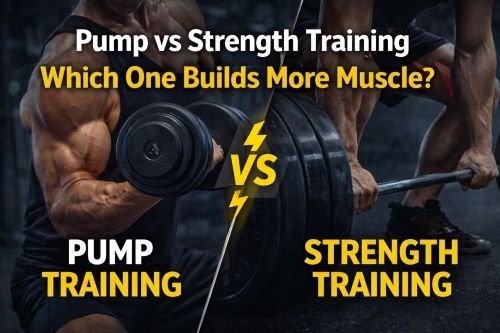
Pump vs Strength Training: Which One Builds More Muscle? 💪

Quick Summary (Key Takeaways)
• Strength training typically uses heavier weights and lower rep ranges to improve force production and overall lifting ability.
• Pump-focused training uses moderate to higher repetitions and shorter rest periods to increase muscle engagement and circulation during workouts.
• Both training styles stimulate muscles in different ways and can contribute to muscle development when used consistently.
• Strength training often builds a foundation that allows athletes to lift heavier weights during hypertrophy-focused workouts.
• Pump-style workouts can increase time under tension and metabolic stress during training sessions.
• Many successful bodybuilding programs combine both pump training and strength training to maximize results.
Pump vs Strength Training: Which One Builds More Muscle?
In gyms around the world, athletes debate which training method builds more muscle: strength training or pump-focused workouts.
Some lifters focus on heavy weights and low repetitions, believing that lifting as much weight as possible is the key to muscle development. Others prioritize high-repetition workouts designed to create a strong muscle pump during training.
Both training styles have passionate supporters, and both can play an important role in building muscle when used correctly.
Understanding the differences between these approaches can help athletes design a balanced program that supports both strength and muscular development.
In reality, the most effective training programs often combine elements of both methods.
What Is Strength Training?
Strength training refers to resistance training that emphasizes lifting heavier weights with lower repetition ranges.
This style of training focuses on improving the body’s ability to produce force.
Strength training programs typically include:
• heavier loads
• lower repetition ranges
• longer rest periods
• compound exercises
Common strength-focused rep ranges include:
• 1–3 repetitions
• 3–5 repetitions
• occasionally up to 6 repetitions
Athletes performing strength training often prioritize major compound movements such as:
• squats
• deadlifts
• bench presses
• overhead presses
• rows
These exercises involve multiple muscle groups working together, allowing athletes to lift heavier weights.
Strength training improves neuromuscular coordination and helps athletes develop the ability to handle heavier loads during workouts.
What Is Pump Training?
Pump training refers to workouts designed to create the muscle pump sensation, where muscles temporarily appear fuller and tighter during exercise.
This effect occurs when increased blood flow reaches the working muscles during resistance training.
Pump-focused workouts usually involve:
• moderate weights
• higher repetition ranges
• shorter rest periods
• higher training volume
Typical rep ranges for pump training include:
• 8–12 repetitions
• 12–15 repetitions
• occasionally 15–20 repetitions
These workouts often include isolation exercises that allow athletes to focus on specific muscle groups.
Examples include:
• biceps curls
• triceps extensions
• lateral raises
• leg extensions
Pump training increases time under tension, which means muscles remain engaged for longer periods during each set.
Many bodybuilders value the pump because it provides visual and physical feedback during workouts.
How Muscles Respond to Resistance Training
To understand how both training styles work, it’s important to look at how muscles adapt to resistance training.
Muscle development is generally influenced by several factors, including:
• mechanical tension
• metabolic stress
• muscle fiber recruitment
Each training style emphasizes these factors differently.
Strength training places a strong emphasis on mechanical tension, which occurs when muscles generate force against heavy resistance.
Pump training emphasizes metabolic stress, which builds during longer sets with shorter rest periods.
Both types of stress contribute to muscular adaptation.
Mechanical Tension and Strength Development
Mechanical tension occurs when muscles are exposed to heavy resistance.
Lifting heavier weights forces muscle fibers to generate greater force.
Over time, the body adapts to these demands by improving strength and increasing the muscle’s ability to handle heavier loads.
Strength training also helps recruit high-threshold muscle fibers, which are capable of producing significant force.
These fibers play an important role in overall strength development.
When athletes become stronger, they can often perform hypertrophy-focused training with heavier weights later.
This is one reason many bodybuilding programs incorporate strength phases.
Metabolic Stress and Pump Training
Pump training creates metabolic stress through longer sets and shorter rest periods.
As muscles contract repeatedly during a set, metabolic byproducts accumulate in the muscle tissue.
This accumulation contributes to the feeling of muscle fatigue and fullness during workouts.
The pump effect also occurs when increased blood flow fills the muscle tissue during exercise.
Many bodybuilders appreciate this sensation because it enhances the mind–muscle connection, helping them feel the targeted muscle working during each exercise.
Metabolic stress is one of the factors researchers believe may contribute to muscle development when combined with resistance training.
Time Under Tension
Time under tension refers to how long muscles remain engaged during each set.
Pump training often increases time under tension because repetitions are performed for longer durations.
For example:
A slow set of 12 repetitions may keep muscles engaged for 40–50 seconds.
A heavy set of 3 repetitions may only last 10–15 seconds.
Longer time under tension can increase muscular fatigue and metabolic stress during workouts.
This is one reason moderate rep ranges are often associated with bodybuilding-style training.
Training Volume
Training volume refers to the total workload performed during a workout.
It is often calculated as:
Sets × Repetitions × Weight
Pump-focused workouts typically include higher total volume because they involve more repetitions and sets.
Higher training volume can increase overall muscle engagement throughout the workout.
However, strength training may involve heavier weights, which also contribute to training intensity.
Balancing volume and intensity is an important part of effective program design.
Which Training Style Builds More Muscle?
The answer may surprise many athletes: both training styles can support muscle development.
Research in exercise science suggests that muscles respond to multiple forms of resistance training.
Strength training improves force production and allows athletes to progressively lift heavier weights.
Pump-focused training increases time under tension and metabolic stress.
Combining these two methods often produces the most balanced results.
Many successful bodybuilding programs include:
• heavy compound exercises
• moderate hypertrophy training
• higher-repetition finishing sets
This layered approach allows athletes to stimulate muscles in different ways.
Why Many Bodybuilders Combine Both
Rather than choosing one method over the other, many experienced athletes use both strength and pump training within the same program.
For example, a typical workout might look like this:
Heavy compound movement
Bench Press — 4 sets of 5 reps
Moderate hypertrophy exercise
Incline Dumbbell Press — 3 sets of 10 reps
Pump-focused isolation movement
Cable Flyes — 3 sets of 15 reps
This structure allows athletes to benefit from heavy lifting while also maximizing muscle engagement later in the workout.
Many bodybuilding routines are designed using this progression.
Recovery and Muscle Adaptation
Regardless of training style, recovery is essential for muscle development.
During workouts, muscles experience physical stress. After training, the body repairs and adapts to that stress.
Key recovery factors include:
• adequate sleep
• hydration
• balanced nutrition
• rest days between workouts
Without proper recovery, training performance may decline and progress may slow.
Athletes who manage recovery effectively often maintain more consistent training progress.
Nutrition and Muscle Development
Nutrition supports the energy demands of resistance training.
Athletes often prioritize:
Protein Intake
Protein provides amino acids that help support muscle maintenance and repair after workouts.
Common protein sources include:
• lean meats
• eggs
• dairy products
• plant-based proteins
Carbohydrates
Carbohydrates provide energy for demanding workouts by supporting muscle glycogen levels.
Athletes performing intense training sessions often include carbohydrates in their nutrition plans.
Hydration
Hydration supports circulation and muscular performance during exercise.
Water plays an important role in maintaining workout intensity and endurance.
Supplements and Training Support
Many athletes incorporate sports nutrition supplements alongside their training routines.
Common ingredients used in sports nutrition products include:
• creatine
• beta-alanine
• L-citrulline
• amino acids
• electrolytes
These ingredients are commonly included in supplements designed to support workout performance.*
*These statements have not been evaluated by the Food and Drug Administration. Dietary supplements are not intended to diagnose, treat, cure, or prevent any disease.
Combining Strength and Pump Training
Many athletes find that combining heavy strength training with pump-focused workouts creates a balanced training routine.
For example, strength-focused compound lifts can help build a foundation that allows athletes to handle heavier weights during hypertrophy training.
Some athletes also incorporate formulas such as Pump Support Ultra alongside their workouts as part of a broader performance-support routine designed to complement structured resistance training.
When combined with progressive overload, balanced nutrition, and recovery, these strategies may help support consistent training performance.*
*Always follow product instructions and consult a qualified professional if you have questions about supplement use.
Final Thoughts
The debate between pump training and strength training often misses an important point: both methods can play valuable roles in muscle development.
Strength training helps athletes build the ability to lift heavier weights, while pump-focused workouts increase time under tension and muscle engagement.
Rather than choosing one method exclusively, many successful bodybuilders combine both approaches to create balanced and effective training programs.
By incorporating progressive overload, managing training volume, prioritizing recovery, and maintaining consistent workouts, athletes can develop a training strategy that supports long-term muscle development.
References
Schoenfeld, B. J. (2010). The mechanisms of muscle hypertrophy and their application to resistance training. Journal of Strength and Conditioning Research.
Morton, R. W., et al. (2019). Resistance training volume enhances muscle hypertrophy. Medicine & Science in Sports & Exercise.
American College of Sports Medicine. Resistance Training Guidelines.
Wackerhage, H., et al. (2019). Stimuli and sensors that initiate skeletal muscle hypertrophy. Sports Medicine.
Phillips, S. M. (2014). Exercise and muscular adaptations. Sports Medicine.
National Strength and Conditioning Association. Essentials of Strength Training and Conditioning.
Common Questions (FAQ)
Does strength training build muscle?
Yes. Strength training can contribute to muscle development by increasing mechanical tension and improving lifting capacity.
What is pump training?
Pump training refers to workouts that use moderate weights and higher repetitions to increase muscle engagement and circulation during exercise.
Is pump training necessary for muscle growth?
Pump training is not strictly required, but it may contribute to metabolic stress during workouts, which is one factor associated with muscular adaptation.
Should athletes combine both training styles?
Many athletes combine strength training and pump-focused workouts to create a balanced resistance training program.
How many reps are best for muscle growth?
Moderate repetition ranges such as 6–12 reps are commonly used in bodybuilding programs, though multiple rep ranges can be effective.
Can beginners use both training styles?
Yes. Beginners often start with moderate rep ranges and gradually incorporate different training styles as they gain experience.