Blog
Creatine Explained: Why It’s One of the Most Popular Sports Supplements 💪


Quick Summary (Key Takeaways)
• Creatine is one of the most widely used and researched ingredients in sports nutrition.
• It plays a role in supporting the body’s natural energy systems during short bursts of intense activity.
• Athletes often use creatine to complement strength training, resistance workouts, and high-intensity exercise routines.
• Creatine works by helping replenish ATP, the primary energy molecule used during powerful muscle contractions.
• Many athletes incorporate creatine into structured training programs that include progressive overload and consistent workouts.
• When used alongside balanced nutrition, hydration, and recovery practices, creatine can support overall workout performance.
Creatine Explained: Why It’s One of the Most Popular Sports Supplements
In the world of sports nutrition, few ingredients are as well known as creatine. Walk into any gym or fitness store and you will likely see creatine listed on supplement labels, included in pre-workout formulas, or sold as a standalone product.
For decades, athletes have incorporated creatine into their training routines to support performance during intense exercise. From bodybuilders and strength athletes to recreational gym-goers, creatine has become a common part of many workout preparation strategies.
But what exactly is creatine, and why has it become such a widely used sports supplement?
Understanding how creatine works in the body can help athletes make informed decisions about incorporating it into their training routines.
What Is Creatine?
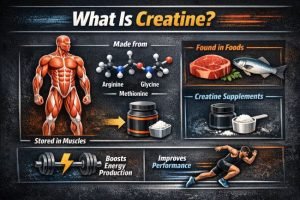
Creatine is a naturally occurring compound found in small amounts in certain foods and produced within the body. It is primarily stored in skeletal muscle tissue, where it helps support the body’s natural energy systems during high-intensity activity.
Creatine is formed from three amino acids:
• arginine
• glycine
• methionine
The body produces creatine naturally, and additional amounts can be obtained from foods such as meat and fish.
However, athletes who train intensely may use supplemental creatine to increase the availability of creatine within muscle cells.
This increased availability may support energy production during short bursts of physical activity such as weightlifting or sprinting.
How Creatine Works in the Body
To understand why creatine is widely used by athletes, it is helpful to look at the body’s energy systems.
During high-intensity exercise, muscles rely on a molecule called ATP (adenosine triphosphate) to generate energy for muscle contractions.
ATP is often described as the body’s primary energy currency.
However, the body stores only a limited amount of ATP within muscle cells. During intense exercise, these stores can be used quickly.
Creatine helps support the body’s ability to regenerate ATP during short bursts of intense activity.
When ATP is used during exercise, it converts to ADP (adenosine diphosphate). Creatine helps donate a phosphate molecule that allows ADP to convert back into ATP.
This process helps maintain energy availability during short, powerful movements.
Because of this role in energy metabolism, creatine has become widely used in strength training and high-intensity sports.
Why Athletes Use Creatine
Athletes often choose supplements that support their training programs and overall workout performance.
Creatine has become popular because it supports the body’s natural energy systems during activities that involve rapid muscle contractions.
These activities may include:
• resistance training
• sprinting
• high-intensity interval workouts
• explosive athletic movements
Many athletes include creatine as part of a broader sports nutrition routine designed to complement structured training programs.
Creatine is particularly popular among strength athletes and bodybuilders who perform repeated sets of resistance training exercises.
Creatine and Strength Training
Strength training places significant demands on the body’s energy systems.
Exercises such as squats, deadlifts, bench presses, and rows require powerful muscle contractions over short time periods.
Creatine’s role in supporting ATP regeneration makes it particularly relevant for this type of activity.
Athletes performing heavy resistance training often focus on progressive overload, gradually increasing the weight or training intensity over time.
By supporting energy availability during intense workouts, creatine may complement structured strength training routines.
Many athletes incorporate creatine into programs designed around compound exercises and progressive training loads.
Creatine and Muscle Performance
Beyond strength training, creatine is commonly included in sports nutrition routines designed to support overall workout performance.
During intense workouts, muscles require rapid energy production to maintain repeated contractions.
Creatine helps support the body’s ability to maintain this energy production during short bursts of activity.
Athletes who perform multiple sets of resistance training often rely on the body’s ability to repeatedly generate ATP.
Because creatine contributes to this process, it has become widely recognized within the sports nutrition industry.
Creatine is often included in formulas designed to support workout preparation and exercise performance.
Types of Creatine Supplements
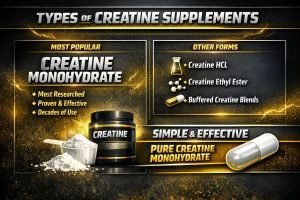
Several forms of creatine are available in sports nutrition products.
The most widely studied and commonly used form is creatine monohydrate.
Creatine monohydrate has been used in sports nutrition for decades and is frequently included in performance-focused supplements.
Other forms sometimes found in products include:
• creatine hydrochloride
• creatine ethyl ester
• buffered creatine blends
While different forms exist, creatine monohydrate remains one of the most widely used ingredients in sports nutrition.
Many athletes prefer simple creatine formulas that contain only creatine monohydrate.
Creatine and Hydration
Because creatine is stored within muscle cells, hydration is an important consideration when incorporating creatine into a training routine.
Athletes often focus on maintaining proper hydration to support circulation and overall performance during workouts.
Water supports many physiological functions including:
• nutrient transport
• muscle function
• temperature regulation during exercise
Maintaining consistent hydration habits is often recommended for individuals participating in intense training programs.
Hydration is an essential component of any sports nutrition routine.
Creatine and Workout Timing
Creatine can be incorporated into training routines in several ways.
Some athletes take creatine before workouts as part of their pre-training routine.
Others include it after workouts alongside post-exercise nutrition.
Because creatine works by increasing the availability of creatine stored within muscle cells, consistent use over time is typically more important than precise timing.
Athletes often incorporate creatine into their daily routines alongside balanced nutrition and regular training schedules.
Nutrition and Training Support
Creatine works best when combined with other foundational aspects of athletic training.
Athletes who train regularly often focus on several key habits that support their performance.
Balanced Nutrition
Balanced nutrition provides the nutrients needed to support energy levels and training recovery.
Athletes often prioritize protein, carbohydrates, and healthy fats within their nutrition plans.
Hydration
Water intake helps support circulation and muscle function during exercise.
Consistent hydration supports both training and recovery.
Recovery and Sleep
Recovery allows the body to repair and adapt following intense workouts.
Adequate sleep helps support the physical and neurological processes associated with training.
Creatine is often used alongside these habits as part of a comprehensive performance strategy.
Creatine and Sports Nutrition Supplements
Many sports nutrition products include creatine as part of broader performance formulas.
Common ingredients often combined with creatine include:
• beta-alanine
• L-citrulline
• amino acids
• electrolytes
These ingredients are frequently used in products designed to support workout preparation and performance.*
*These statements have not been evaluated by the Food and Drug Administration. Dietary supplements are not intended to diagnose, treat, cure, or prevent any disease.
Athletes who incorporate sports supplements typically do so alongside structured training programs and balanced nutrition.
Combining Creatine With Pump-Focused Training
Some athletes combine creatine with pump-support supplements to support different aspects of their training routines.
For example, formulas like Pump Support Ultra may be included alongside structured resistance training programs that involve supersets, drop sets, and higher-rep pump workouts.
When used alongside consistent training, balanced nutrition, hydration, and recovery strategies, these types of supplements may complement performance-focused training routines.*
*Always follow product instructions and consult a qualified professional if you have questions about supplement use.
Final Thoughts
Creatine has become one of the most widely recognized ingredients in sports nutrition.
Its role in supporting the body’s natural energy systems during high-intensity exercise has made it a popular choice among athletes and fitness enthusiasts.
When combined with structured training programs, balanced nutrition, hydration, and recovery practices, creatine can be a valuable addition to many athletic routines.
For individuals focused on strength training and performance, understanding how creatine works can help them make informed decisions about incorporating it into their fitness strategies.
References
Kreider, R. B., et al. (2017). International Society of Sports Nutrition position stand: creatine supplementation and exercise. Journal of the International Society of Sports Nutrition.
American College of Sports Medicine. Nutrition and Athletic Performance Guidelines.
Schoenfeld, B. J. (2010). Mechanisms of muscle hypertrophy and resistance training. Journal of Strength and Conditioning Research.
Phillips, S. M. (2014). Exercise and muscular adaptations. Sports Medicine.
Morton, R. W., et al. (2019). Resistance training volume and muscle adaptation. Medicine & Science in Sports & Exercise.
National Strength and Conditioning Association. Essentials of Strength Training and Conditioning.
Common Questions (FAQ)
What is creatine used for?
Creatine is commonly used by athletes to support high-intensity exercise performance and resistance training routines.
Is creatine naturally found in the body?
Yes. Creatine is produced naturally in the body and is also found in small amounts in certain foods.
When do athletes take creatine?
Some athletes take creatine before workouts, while others take it after training or at another consistent time each day.
Do beginners use creatine?
Some beginners include creatine as part of their sports nutrition routine, often alongside structured training programs.
Is hydration important when using creatine?
Yes. Maintaining proper hydration supports overall muscle function and exercise performance.
Can creatine be combined with other sports supplements?
Creatine is often included alongside other ingredients commonly found in sports nutrition formulas.