Blog
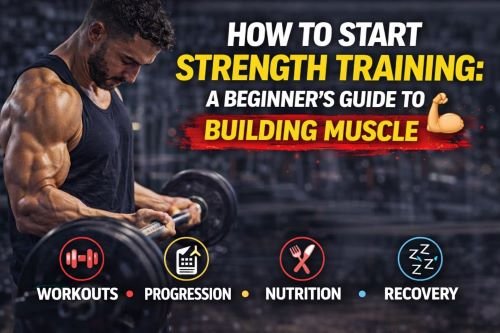
How to Start Strength Training: A Beginner’s Guide to Building Muscle 💪

Quick Summary (Key Takeaways)
• Strength training is one of the most effective ways to build muscle and improve overall fitness.
• Beginners should focus on learning proper exercise form and gradually increasing workout intensity.
• A balanced strength training routine typically includes compound exercises, moderate repetition ranges, and progressive overload.
• Proper nutrition, hydration, and recovery help support muscle development and consistent training progress.
• Starting with simple workouts and building consistency over time is more important than training at extreme intensity.
• Many athletes incorporate sports nutrition supplements as part of their overall training routine.
How to Start Strength Training: A Beginner’s Guide to Building Muscle
Strength training has become one of the most popular forms of exercise for people looking to build muscle, improve fitness, and develop physical strength. While the gym can feel overwhelming at first, strength training is actually one of the most straightforward and effective ways to improve overall physical performance.
For beginners, the key to success is understanding how strength training works and building a routine that supports gradual progress. Many experienced athletes and bodybuilders started with simple training programs that focused on learning proper technique and building consistency.
Strength training doesn’t require advanced equipment or complicated routines to begin. With the right approach, beginners can build a strong foundation that supports long-term muscle development.
This guide will explain how strength training works, what exercises beginners should start with, and how to build a safe and effective workout routine.
What Is Strength Training?
Strength training refers to exercises that use resistance to stimulate muscles. This resistance may come from several sources, including:
• free weights
• resistance machines
• bodyweight exercises
• resistance bands
When muscles work against resistance, they generate force. Over time, the body adapts to this stress by strengthening muscle fibers and improving the ability to perform physical tasks.
Strength training programs are commonly used by:
• bodybuilders
• athletes
• fitness enthusiasts
• individuals improving overall fitness
Regardless of the goal, strength training helps the body adapt to physical challenges and improve overall performance.
Why Strength Training Supports Muscle Development
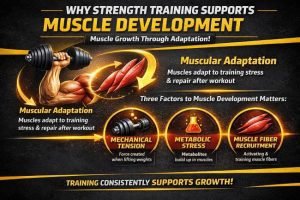
Muscle development occurs through a process called muscular adaptation. During strength training, muscles are exposed to physical stress as they contract repeatedly against resistance.
After the workout, the body begins repairing and adapting to that stress. Over time, this process can support improvements in strength and muscular development.
Three important factors contribute to this process:
• mechanical tension
• metabolic stress
• muscle fiber recruitment
Strength training routines designed around these principles help stimulate muscles effectively during workouts.
Consistency is one of the most important factors for beginners starting a strength training routine.
Starting With Proper Exercise Technique
One of the most important priorities for beginners is learning proper exercise technique.
Using correct form helps ensure that muscles perform the intended movement and reduces unnecessary strain on joints and surrounding muscles.
When learning strength training exercises, beginners should focus on:
• controlled movements
• balanced posture
• proper range of motion
Many beginners start with lighter weights while learning exercises to build confidence and movement control.
Once technique improves, weight can gradually increase.
Learning proper form early in training helps support long-term progress and safer workouts.
Compound Exercises for Beginners
Compound exercises are movements that involve multiple muscle groups working together.
These exercises are commonly recommended for beginners because they train several muscles simultaneously and help develop overall strength.
Some common compound exercises include:
• squats
• bench presses
• rows
• pull-ups or assisted pull-ups
• overhead presses
• deadlifts
These movements engage large muscle groups and allow beginners to develop strength efficiently.
Compound exercises also help improve coordination and body awareness during training.
Many beginner strength programs emphasize compound movements as the foundation of their workouts.
Understanding Repetition Ranges
Repetition ranges refer to how many times an exercise is performed during each set.
Beginners often start with moderate rep ranges because they balance intensity with muscle engagement.
A typical beginner strength routine might include:
• 8–12 repetitions per set
• 3–4 sets per exercise
• 4–6 exercises per workout
This approach helps keep muscles under tension while allowing beginners to focus on proper technique.
As training experience increases, athletes may experiment with different rep ranges to support strength or hypertrophy training goals.
Progressive Overload for Muscle Growth
One of the most important principles in strength training is progressive overload.
Progressive overload means gradually increasing the difficulty of workouts over time.
Muscles adapt to repeated stress, so increasing training demands encourages continued progress.
Progressive overload can be achieved by:
• increasing weight lifted
• performing additional repetitions
• increasing the number of sets
• improving exercise control and tempo
Beginners should increase intensity gradually to maintain safe and sustainable training progress.
Small improvements over time often produce the most consistent results.
Creating a Beginner Workout Routine
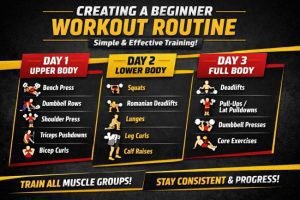
A beginner strength training routine should focus on simplicity and consistency.
Many beginners train three days per week to allow time for recovery between workouts.
Example beginner routine:
Day 1 – Upper Body
• Bench press
• Dumbbell rows
• Shoulder press
• Triceps pushdowns
• Biceps curls
Day 2 – Lower Body
• Squats
• Romanian deadlifts
• Lunges
• Leg curls
• Calf raises
Day 3 – Full Body
• Deadlifts
• Pull-ups or lat pulldowns
• Dumbbell presses
• Core exercises
This structure allows beginners to train all major muscle groups throughout the week.
Balanced routines help maintain consistent progress.
The Role of Recovery in Strength Training
Recovery is a critical part of muscle development.
During workouts, muscles experience temporary stress. After training, the body repairs and adapts to that stress.
Recovery allows muscles to restore energy and prepare for the next training session.
Important recovery factors include:
• sleep
• hydration
• balanced nutrition
• rest days between workouts
Many strength training programs include rest days to support recovery and reduce accumulated fatigue.
Beginners often benefit from training every other day to allow muscles adequate recovery time.
Nutrition for Building Muscle
Nutrition supports the energy demands of strength training.
Athletes who train consistently often prioritize balanced nutrition that includes protein, carbohydrates, and healthy fats.
Protein Intake
Protein provides amino acids that support muscle repair and maintenance after workouts.
Common protein sources include:
• lean meats
• eggs
• dairy products
• plant-based proteins
Carbohydrates
Carbohydrates help support energy levels during workouts by replenishing muscle glycogen.
Examples include:
• rice
• oats
• fruits
• whole grains
Healthy Fats
Healthy fats contribute to balanced nutrition and energy intake.
Sources may include:
• nuts
• seeds
• avocados
• olive oil
Balanced nutrition helps support both training performance and recovery.
Hydration and Workout Performance
Hydration is another key component of effective strength training.
Water supports several important physiological functions, including:
• nutrient delivery
• circulation
• muscle contraction during exercise
Athletes who maintain consistent hydration habits often find it easier to maintain workout intensity.
Hydration also plays a role in recovery following training sessions.
Maintaining proper hydration is an important part of any fitness routine.
Supplements and Training Support
Some athletes incorporate sports nutrition supplements alongside their training routines.
Common ingredients used in sports nutrition products include:
• creatine
• amino acids
• electrolytes
• L-citrulline
• beta-alanine
These ingredients are commonly included in supplements designed to support workout performance.*
*These statements have not been evaluated by the Food and Drug Administration. Dietary supplements are not intended to diagnose, treat, cure, or prevent any disease.
Supplements are typically used alongside balanced nutrition and structured training programs.
Final Thoughts
Strength training is one of the most effective ways for beginners to build muscle and improve overall physical fitness.
Starting with simple exercises, focusing on proper form, and gradually increasing workout intensity allows beginners to develop strength safely.
Consistency remains the most important factor in building muscle over time.
By combining structured workouts, balanced nutrition, proper recovery, and hydration, beginners can create a training routine that supports long-term progress.
Strength training is not about immediate results but about building sustainable habits that lead to continued improvement.
References
Schoenfeld, B. J. (2010). The mechanisms of muscle hypertrophy and their application to resistance training. Journal of Strength and Conditioning Research.
American College of Sports Medicine. Resistance Training Guidelines.
Phillips, S. M. (2014). Exercise and muscular adaptations. Sports Medicine.
Morton, R. W., et al. (2019). Resistance training volume enhances muscle hypertrophy. Medicine & Science in Sports & Exercise.
National Strength and Conditioning Association. Essentials of Strength Training and Conditioning.
Wackerhage, H., et al. (2019). Stimuli and sensors that initiate skeletal muscle hypertrophy. Sports Medicine.
Common Questions (FAQ)
How often should beginners strength train?
Many beginners start with three workouts per week to allow recovery between sessions.
What exercises should beginners start with?
Compound exercises such as squats, presses, rows, and deadlifts are commonly recommended for beginners.
How long does it take to build muscle?
Muscle development occurs gradually and depends on consistency, nutrition, and recovery.
Should beginners lift heavy weights?
Beginners often start with lighter weights while learning proper technique before increasing intensity.
Do beginners need supplements?
Supplements are optional and are often used alongside structured training and balanced nutrition.
Is rest important for muscle development?
Yes. Recovery allows the body to repair and adapt after strength training workouts.