Blog
Progressive Overload Explained: The Key to Building More Muscle 💪

Quick Summary (Key Takeaways)
• Progressive overload is a fundamental training principle used to support strength and muscle development over time.
• It involves gradually increasing the demands placed on muscles during workouts.
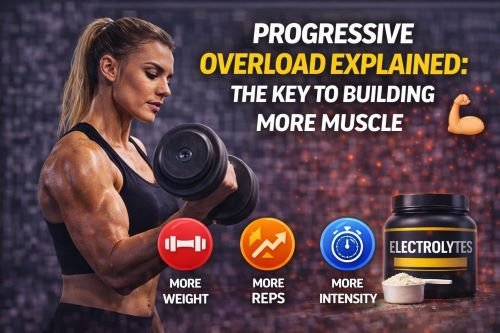
• Athletes can apply progressive overload by increasing weight, repetitions, sets, or training intensity.
• Consistency and gradual progression are key factors in long-term fitness results.
• Balanced nutrition, recovery, and hydration support the body’s ability to adapt to training.
• Many strength training programs are designed around progressive overload to promote continued progress.
Progressive Overload Explained: The Key to Building More Muscle
In strength training and bodybuilding, progress does not happen simply by repeating the same workout over and over again. Muscles adapt to physical stress, which means that training routines must evolve over time in order to continue producing results.
One of the most widely recognized principles used by athletes and coaches is progressive overload. This concept involves gradually increasing the challenge placed on muscles during workouts so that the body continues adapting and improving.
Whether someone is a beginner or an experienced lifter, progressive overload remains one of the most important strategies for building muscle and improving strength. By understanding how progressive overload works and how to apply it safely, athletes can create training programs that support consistent long-term progress.
What Is Progressive Overload?
Progressive overload refers to the gradual increase of stress placed on the body during training. This increase encourages the body to adapt to higher demands.
When muscles are exposed to resistance during exercise, they experience physical stress. After the workout, the body begins repairing and adapting to that stress.
Over time, this process supports improvements in strength and muscle development.
However, if the same workout is repeated continuously without increasing intensity, the body eventually adapts and progress slows.
Progressive overload helps prevent this plateau by steadily increasing training demands.
Why Progressive Overload Supports Muscle Development
Muscles respond to resistance training by adapting to the physical challenges placed upon them. This adaptation process allows muscles to handle greater workloads over time.
During resistance training, muscle fibers contract repeatedly as they generate force. These contractions create temporary stress within the muscle tissue.
Following the workout, the body repairs and strengthens these fibers as part of the natural adaptation process.
Progressive overload ensures that muscles continue receiving new challenges so that adaptation continues.
Without progressive overload, workouts may maintain current fitness levels but may not stimulate continued development.
Ways to Apply Progressive Overload
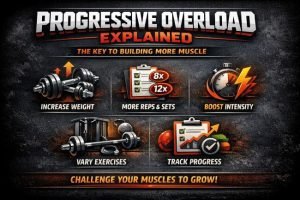
There are several methods athletes use to apply progressive overload in their training routines.
Each method gradually increases the demands placed on muscles.
Increasing Training Weight
One of the most common ways to apply progressive overload is by increasing the amount of weight lifted during exercises.
For example, if an athlete performs a bench press with a certain weight for several weeks, gradually increasing the load can provide a new training stimulus.
Even small increases in weight over time can contribute to steady progress.
Increasing Repetitions
Another approach involves increasing the number of repetitions performed during each set.
For example, an athlete might begin performing 8 repetitions of an exercise and gradually increase to 10 or 12 repetitions over time.
Increasing repetitions extends the amount of time muscles remain under tension during workouts.
Increasing the Number of Sets
Athletes may also increase training volume by adding additional sets to their workouts.
For example, a routine that originally included three sets of an exercise might gradually increase to four sets.
Increasing sets adds additional workload to the training session.
Improving Exercise Control
Progressive overload can also be achieved by improving exercise technique and movement control.
Performing exercises with slower and more controlled repetitions increases muscle engagement during each movement.
This approach increases time under tension, which can contribute to training intensity without necessarily increasing weight.
Compound Exercises and Progressive Overload
Compound exercises are often used as the foundation of progressive overload training programs.
Compound movements involve multiple muscle groups working together during an exercise.
Examples include:
• squats
• bench presses
• deadlifts
• rows
• overhead presses
These exercises allow athletes to lift heavier weights and progressively increase resistance over time.
Because compound movements engage several muscles at once, they provide an efficient way to apply progressive overload during workouts.
Many strength training programs prioritize compound exercises as core components of training routines.
Progressive Overload and Training Volume
Training volume refers to the total workload performed during a workout.
It is often calculated as:
Sets × Repetitions × Weight
Progressive overload can be achieved by gradually increasing training volume.
For example, an athlete may increase:
• the number of sets
• the repetitions per set
• the total weight lifted during the workout
Managing training volume carefully helps ensure that workouts remain challenging while allowing sufficient recovery between sessions.
The Role of Consistency

Consistency is one of the most important factors in applying progressive overload effectively.
Muscle development occurs gradually, and progress is typically achieved over weeks or months of consistent training.
Athletes who train regularly and track their progress are more likely to see steady improvements.
Training logs or fitness apps can help athletes record exercises, weights, and repetitions from each workout.
Tracking progress makes it easier to identify opportunities for gradual increases in training intensity.
Avoiding Training Plateaus
A training plateau occurs when progress slows or stops despite continued effort.
Plateaus often occur when the body has fully adapted to a workout routine.
Progressive overload helps athletes overcome plateaus by introducing new challenges.
Some strategies athletes use include:
• increasing weight
• adjusting repetition ranges
• modifying exercise tempo
• introducing new exercises
Making small adjustments to training programs helps maintain progress over time.
Recovery and Adaptation
Recovery plays a critical role in the progressive overload process.
During workouts, muscles experience temporary stress. After training, the body begins repairing and adapting to this stress.
Adequate recovery supports:
• muscle repair
• energy restoration
• continued training performance
Athletes often prioritize recovery through:
• rest days
• sleep
• balanced nutrition
• hydration
Recovery allows the body to adapt to progressively increasing training demands.
Nutrition for Strength Training

Nutrition provides the nutrients required to support muscle maintenance and recovery.
Athletes who train regularly often prioritize balanced nutrition that includes protein, carbohydrates, and healthy fats.
Protein Intake
Protein provides amino acids that support muscle repair and maintenance following exercise.
Examples include:
• poultry
• fish
• eggs
• dairy products
• plant-based protein sources
Carbohydrates
Carbohydrates provide energy for workouts by replenishing glycogen stores.
Examples include:
• oats
• rice
• fruits
• whole grains
Healthy Fats
Healthy fats contribute to balanced nutrition and support energy intake.
Balanced nutrition supports training consistency and recovery.
Hydration and Workout Performance
Hydration is another important factor that supports progressive overload training.
Water contributes to:
• nutrient delivery
• muscle function
• temperature regulation during exercise
Athletes who maintain consistent hydration habits often find it easier to maintain workout intensity.
Hydration also plays an important role in post-workout recovery.
Maintaining fluid balance supports overall athletic performance.
Supplements and Training Support

Many athletes incorporate sports nutrition supplements alongside their training routines.
Common ingredients found in sports nutrition products include:
• creatine
• amino acids
• beta-alanine
• electrolytes
• L-citrulline
These ingredients are commonly used in products designed to support workout performance.*
*These statements have not been evaluated by the Food and Drug Administration. Dietary supplements are not intended to diagnose, treat, cure, or prevent any disease.
Supplements are typically used alongside balanced nutrition and structured training programs.
Combining Progressive Overload With Performance Strategies
Athletes often combine progressive overload with other training strategies to maintain consistent progress.
Some individuals also include supplements such as Pump Support Ultra as part of their workout preparation routine.
When combined with structured training, balanced nutrition, hydration, and recovery habits, these strategies may help support consistent performance and long-term training progress.*
*Always follow product instructions and consult a qualified professional if you have questions about supplement use.
Final Thoughts
Progressive overload is one of the most important principles in strength training and muscle development.
By gradually increasing the demands placed on muscles during workouts, athletes encourage the body to adapt and improve over time.
Whether through increasing weight, repetitions, sets, or training intensity, progressive overload helps ensure that workouts continue challenging the body.
When combined with balanced nutrition, hydration, recovery, and consistent training habits, progressive overload can support steady progress in strength training programs.
For athletes focused on building muscle and improving performance, understanding this principle provides a foundation for long-term success.
References
Schoenfeld, B. J. (2010). The mechanisms of muscle hypertrophy and resistance training. Journal of Strength and Conditioning Research.
American College of Sports Medicine. Resistance Training Guidelines.
Phillips, S. M. (2014). Exercise and muscular adaptations. Sports Medicine.
Morton, R. W., et al. (2019). Resistance training volume and muscle adaptation. Medicine & Science in Sports & Exercise.
National Strength and Conditioning Association. Essentials of Strength Training and Conditioning.
Wackerhage, H., et al. (2019). Skeletal muscle adaptation and exercise stimuli. Sports Medicine.
Common Questions (FAQ)
What is progressive overload?
Progressive overload is the gradual increase of training intensity to encourage the body to adapt and improve over time.
How often should athletes increase training weight?
Athletes typically increase weight gradually once they can comfortably perform their current workload with proper technique.
Can beginners use progressive overload?
Yes. Beginners often apply progressive overload by gradually increasing repetitions, sets, or resistance over time.
What exercises work best with progressive overload?
Compound exercises such as squats, bench presses, rows, and deadlifts are commonly used in progressive overload training programs.
Is recovery important for progressive overload?
Yes. Recovery allows the body to repair and adapt to the increasing training demands.
Can progressive overload be applied without increasing weight?
Yes. Athletes can also increase repetitions, sets, or time under tension to apply progressive overload.