
Blog
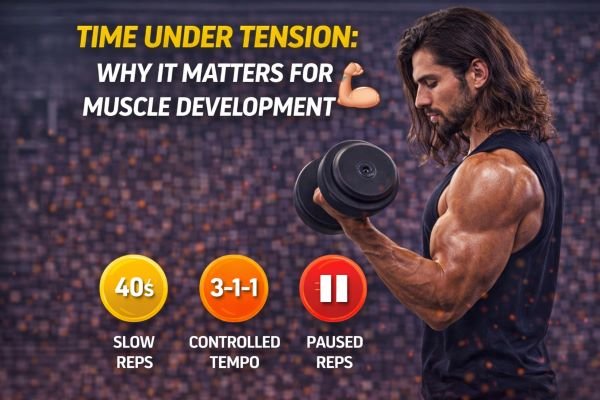
Time Under Tension: Why It Matters for Muscle Development 💪

Quick Summary (Key Takeaways)
• Time Under Tension (TUT) refers to the amount of time a muscle remains under strain during a set of an exercise.
• Controlling tempo and movement speed during resistance training can increase muscle engagement.
• Many strength training programs incorporate TUT techniques to enhance workout intensity.
• Slower, controlled repetitions can increase muscular workload without necessarily increasing weight.
• Training variables such as tempo, reps, and sets can influence total time under tension.
• Balanced nutrition, hydration, recovery, and structured training support overall muscle development.
Time Under Tension: Why It Matters for Muscle Development
Strength training involves more than simply lifting heavier weights. Many experienced athletes and coaches pay close attention to how exercises are performed, not just how much weight is used. One of the most important training variables in resistance exercise is time under tension (TUT).
Time under tension refers to the total amount of time a muscle is actively working during a set of an exercise. This concept has become an important topic in strength training and bodybuilding because it influences how muscles respond to resistance training.
By understanding time under tension and how it affects workouts, athletes can adjust their training techniques to improve muscle engagement and support consistent progress in the gym.
Whether someone is a beginner learning basic movements or an experienced lifter refining their technique, time under tension provides another way to make workouts more effective.
What Is Time Under Tension?
Time under tension describes how long a muscle remains engaged during an exercise set.
Each repetition of an exercise consists of several phases:
• concentric phase – when the muscle shortens as it lifts the weight
• eccentric phase – when the muscle lengthens as the weight lowers
• pause or isometric phase – when the muscle holds a position
The duration of these phases determines the overall time the muscle is under load.
For example, a set of 10 repetitions performed quickly may take about 10–15 seconds. However, performing the same 10 repetitions with slower, controlled movements may extend the set to 30–40 seconds.
This increased time under tension places greater workload on the muscles.
Why Time Under Tension Matters in Strength Training
Muscles respond to resistance training through a process of adaptation. During exercise, muscles experience physical stress. After the workout, the body begins repairing and strengthening the muscle tissue.
Time under tension can influence how much stimulus muscles receive during training.
Longer sets with controlled movements can increase muscle engagement and make exercises more challenging without increasing the weight being lifted.
Many athletes incorporate time under tension techniques into their workouts to enhance training intensity.
This approach can help maintain muscle engagement throughout each repetition.
The Role of Tempo in Resistance Training
Tempo refers to the speed at which repetitions are performed during an exercise.
Tempo is often written as a four-number sequence representing the duration of each movement phase.
For example:
3–1–1–0
This tempo means:
• 3 seconds lowering the weight (eccentric phase)
• 1 second pause
• 1 second lifting the weight (concentric phase)
• 0 seconds pause before the next repetition
Controlling tempo can significantly increase time under tension.
Slowing down movements helps ensure that muscles remain actively engaged throughout the entire exercise.
Many strength training programs incorporate tempo training to improve movement control and muscle activation.
Time Under Tension and Training Intensity

Increasing time under tension can make exercises more demanding even without adding additional weight.
For example, performing slow squats with controlled movements requires sustained muscle engagement.
This extended effort increases the workload placed on the muscles.
Athletes sometimes use time under tension strategies when they want to:
• increase workout intensity
• improve muscle engagement
• focus on exercise technique
• add variety to training routines
TUT techniques allow athletes to challenge muscles in new ways.
Common Time Under Tension Techniques
Several training methods are used to increase time under tension during resistance workouts.
Slow Repetitions
One of the most common techniques is simply slowing down the speed of each repetition.
Instead of lifting and lowering weights quickly, athletes perform movements in a controlled manner.
This approach increases the total time muscles remain engaged.
Paused Repetitions
Paused repetitions involve briefly holding a position during an exercise.
For example, an athlete might pause at the bottom of a squat or during the midpoint of a bench press.
This pause increases time under tension and improves control during the movement.
Isometric Holds
Isometric exercises involve holding a muscle contraction without moving the joint.
Examples include:
• planks
• wall sits
• paused push-ups
These exercises maintain continuous muscle engagement for a specific duration.
Drop Sets
Drop sets involve performing an exercise until fatigue and then reducing the weight to continue the set.
This method extends the duration of the set and increases overall time under tension.
Drop sets are commonly used in bodybuilding-style workouts.
Ideal Time Under Tension for Muscle Development
Different training goals may involve different time under tension ranges.
Although exact numbers vary depending on the training program, many strength training routines focus on sets lasting 30–60 seconds.
This range typically occurs when performing 8–12 controlled repetitions.
Longer sets increase the duration muscles remain engaged, which can contribute to overall training stimulus.
However, time under tension should always be balanced with proper technique and safe lifting practices.
Athletes often adjust tempo and repetition ranges depending on their training goals.
Compound Exercises and Time Under Tension
Compound exercises involve multiple muscle groups working together during a movement.
These exercises are often included in strength training routines that incorporate time under tension strategies.
Examples include:
• squats
• deadlifts
• bench presses
• rows
• overhead presses
Compound movements allow athletes to challenge several muscle groups simultaneously.
Using controlled tempo during these exercises can increase muscle engagement throughout the entire movement.
Many strength training programs combine compound exercises with isolation movements to create balanced workouts.
Time Under Tension and Progressive Overload
Time under tension works well alongside another key training principle known as progressive overload.
Progressive overload involves gradually increasing the demands placed on muscles during training.
Athletes can apply progressive overload by:
• increasing weight
• increasing repetitions
• adding sets
• increasing time under tension
Increasing time under tension provides another way to make exercises more challenging without always adding additional weight.
This strategy is often used when athletes want to improve technique or maintain control during exercises.
Recovery and Muscle Adaptation

Recovery is an important part of any resistance training program.
During workouts, muscles experience temporary stress as they contract repeatedly.
After training, the body begins repairing and adapting to that stress.
Adequate recovery supports:
• muscle repair
• energy restoration
• continued workout performance
Athletes often prioritize recovery through:
• rest days
• sleep
• balanced nutrition
• hydration
These recovery habits support the body’s ability to adapt to increasing training demands.
Nutrition and Training Performance
Nutrition provides the nutrients necessary to support strength training and physical activity.
Athletes who train regularly often prioritize balanced diets that include protein, carbohydrates, and healthy fats.
Protein
Protein provides amino acids that support muscle maintenance and recovery after workouts.
Carbohydrates
Carbohydrates provide energy for strength training sessions.
Healthy Fats
Healthy fats contribute to overall nutritional balance.
Maintaining balanced nutrition helps athletes support consistent training performance.
Hydration and Workout Performance
Hydration also contributes to training performance and muscle function.
Water supports:
• nutrient transport
• muscle contractions
• temperature regulation
Athletes who maintain hydration habits often feel better prepared for intense workouts.
Maintaining hydration before, during, and after workouts supports training consistency.
Supplements and Training Support

Many athletes incorporate sports nutrition supplements alongside their training routines.
Common ingredients found in sports nutrition products include:
• creatine
• amino acids
• beta-alanine
• electrolytes
• L-citrulline
These ingredients are commonly included in products designed to complement resistance training routines.*
*These statements have not been evaluated by the Food and Drug Administration. Dietary supplements are not intended to diagnose, treat, cure, or prevent any disease.
Supplements are typically used alongside balanced nutrition and structured training programs.
Supporting Your Training Routine
Athletes who use time under tension strategies often combine them with structured workout preparation routines.
Some athletes include pump-support supplements such as Pump Support Ultra as part of their pre-workout routine.
These formulas are commonly used alongside strength training programs designed to support muscular engagement and workout intensity.
Final Thoughts
Time under tension is an important concept in resistance training that focuses on how long muscles remain engaged during exercise.
By controlling repetition tempo and movement speed, athletes can increase muscle engagement and training intensity.
This technique provides another way to challenge muscles without always increasing weight.
When combined with progressive overload, balanced nutrition, proper hydration, and recovery, time under tension can play an important role in strength training programs.
Understanding how to apply this training principle helps athletes create workouts that support long-term progress and consistent muscle development.
References
Schoenfeld, B. J. (2010). Mechanisms of muscle hypertrophy and resistance training. Journal of Strength and Conditioning Research.
American College of Sports Medicine. Resistance Training Guidelines.
Phillips, S. M. (2014). Exercise and muscular adaptations. Sports Medicine.
Morton, R. W., et al. (2019). Resistance training volume and muscle adaptation. Medicine & Science in Sports & Exercise.
National Strength and Conditioning Association. Essentials of Strength Training and Conditioning.
Wackerhage, H., et al. (2019). Skeletal muscle adaptation and exercise stimuli. Sports Medicine.
Common Questions (FAQ)
What does time under tension mean?
Time under tension refers to the total amount of time a muscle remains engaged during a set of an exercise.
Does slower lifting build more muscle?
Slower lifting increases time under tension and can increase muscle engagement during workouts.
What is the ideal time under tension for strength training?
Many resistance training sets last between 30 and 60 seconds depending on the number of repetitions performed.
Can beginners use time under tension training?
Yes. Beginners can use controlled tempo during exercises to improve technique and muscle engagement.
Is time under tension better than lifting heavier weight?
Both approaches can be effective. Many training programs combine both strategies.
Should every workout use time under tension?
Athletes often incorporate time under tension periodically as part of varied training programs.