Blog
The Best Pre-Workout Routine for Maximum Muscle Pumps 💪

Quick Summary (Key Takeaways)
A muscle pump occurs when blood flow increases to working muscles during resistance training, creating the temporary fullness many bodybuilders seek.
A structured pre-workout routine can help athletes prepare both physically and mentally for pump-focused workouts.
Key elements include proper nutrition, hydration, warm-ups, training strategy, and supplement preparation.
Ingredients commonly used in pump-focused routines include L-citrulline, creatine, electrolytes, and nitrates.
Training methods such as higher repetitions, shorter rest periods, supersets, and time under tension help enhance muscle pumps.
Consistency with workouts, recovery, and balanced nutrition remains the foundation for long-term strength and performance.
The Best Pre-Workout Routine for Maximum Muscle Pumps
For many bodybuilders and strength athletes, few sensations are as motivating as a strong muscle pump during training. When muscles feel fuller and tighter during a workout, it often indicates that the targeted muscle groups are actively engaged and receiving increased blood flow.
While the pump itself is temporary, many athletes structure their training sessions to maximize this effect. Achieving a strong pump often involves more than simply lifting weights—it requires preparation before the workout even begins.
A well-designed pre-workout routine helps athletes prepare their bodies for intense training, supports circulation, and improves focus during workouts. By combining proper nutrition, hydration, warm-up exercises, and strategic training methods, athletes can create conditions that support stronger pumps during their workouts.
Understanding how to build an effective pre-workout routine can help bodybuilders train more efficiently and get the most out of every session.
Understanding the Muscle Pump
Before diving into pre-workout strategies, it helps to understand what happens in the body when a muscle pump occurs.
During resistance training, muscles contract repeatedly. These contractions require oxygen and nutrients, which are delivered through the bloodstream.
As exercise intensity increases, the body responds by directing more blood to the working muscles. This increase in circulation helps support muscle activity during the workout.
At the same time, the contracting muscles can temporarily limit the blood leaving the muscle tissue. As this cycle repeats throughout a set, blood accumulates in the working muscles.
This process results in the familiar pump sensation that includes:
Temporary muscle fullness
Increased vascular appearance in some athletes
A tight feeling in the muscles being trained
Increased muscle awareness during workouts
Exercise scientists often refer to this effect as exercise-induced hyperemia, which simply describes increased blood flow to active muscles.
Many bodybuilders design their training routines specifically to enhance this process.
Why a Pre-Workout Routine Matters
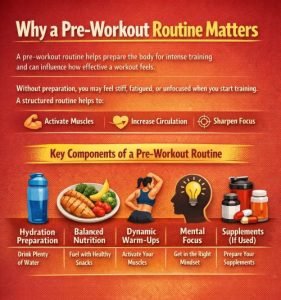
A pre-workout routine helps prepare the body for intense training and can influence how effective a workout feels.
Without preparation, athletes may feel stiff, fatigued, or mentally unfocused when they begin training. A structured routine before the workout helps activate muscles, increase circulation, and prepare the body for the upcoming effort.
A well-designed pre-workout routine typically includes:
Hydration preparation
Balanced nutrition
Dynamic warm-ups
Mental focus
Supplement preparation (if used)
These steps can help athletes enter their workout with greater readiness and confidence.
Step 1: Hydration Before Training
Hydration is one of the most overlooked aspects of pump-focused workouts.
Water plays a vital role in circulation, nutrient transport, and temperature regulation during exercise. When the body is well hydrated, blood volume is better maintained, which helps support normal circulation during workouts.
Because the muscle pump depends on increased blood flow to working muscles, hydration can influence the intensity of the pump sensation.
Athletes often prepare for workouts by drinking water throughout the day and consuming fluids before entering the gym.
Maintaining proper hydration can also help support endurance and performance during longer training sessions.
Step 2: Pre-Workout Nutrition
Nutrition is another important component of an effective pre-workout routine.
Eating balanced meals before training provides the body with fuel needed for high-intensity exercise.
Carbohydrates
Carbohydrates provide energy for resistance training. Muscles store carbohydrates in the form of glycogen, which serves as a key fuel source during workouts.
Athletes often consume carbohydrates before training to help support energy levels and muscular performance.
Protein
Protein provides amino acids that support muscle maintenance and recovery after training sessions.
Many athletes include moderate amounts of protein in their pre-workout meals to complement their training routines.
Healthy Fats
Although fats digest more slowly, they may be included in balanced meals that support overall energy intake throughout the day.
A combination of carbohydrates, protein, and balanced nutrients helps support effective workouts.
Step 3: Dynamic Warm-Up Exercises
A dynamic warm-up helps prepare muscles and joints for resistance training.
Instead of beginning workouts with heavy lifting immediately, athletes often perform light movements to increase circulation and activate muscles.
Examples of dynamic warm-ups include:
Arm circles
Bodyweight squats
Resistance band movements
Light cardio such as cycling or rowing
Mobility exercises
These movements help gradually increase heart rate and improve flexibility before the main workout begins.
A proper warm-up may also help athletes feel more prepared for high-volume pump-focused sets.

Step 4: Mental Focus and Workout Planning
Mental preparation is another important element of an effective pre-workout routine.
Many athletes take a few moments before their workout to focus on their training goals for the day. This may involve reviewing the exercises they plan to perform and visualizing successful sets.
Mental preparation can improve concentration and help athletes maintain proper technique during workouts.
Athletes who approach workouts with a clear plan often experience more productive training sessions.
Step 5: Pre-Workout Supplements (Optional)
Some athletes include sports nutrition supplements as part of their pre-workout preparation.
Certain ingredients are commonly used in products designed to support workout performance and circulation.
Examples include:
L-citrulline
Creatine
Electrolytes
Beta-alanine
Nitrate-containing plant extracts
These ingredients are often included in pump-focused formulas used before training sessions.
For example, some athletes include supplements such as Advanced Pump Support as part of their pre-workout routine to complement high-volume workouts and pump-focused training strategies.
Others may choose formulas like Pump Support Ultra, which are designed to support workout preparation and circulation during demanding training sessions.
These types of products are typically used alongside consistent training, balanced nutrition, hydration, and proper recovery.*
*These statements have not been evaluated by the Food and Drug Administration. Dietary supplements are not intended to diagnose, treat, cure, or prevent any disease.
Step 6: Training Strategies That Enhance Pumps
Even with strong pre-workout preparation, training style plays the largest role in achieving a strong muscle pump.
Bodybuilders often incorporate specific workout techniques to increase circulation and metabolic stress within muscles.
Higher Repetition Ranges
Sets of 10–15 repetitions keep muscles under tension for longer periods and encourage greater blood flow.
Short Rest Periods
Rest periods of 30–60 seconds help maintain circulation in the muscles between sets.
Supersets
Supersets involve performing two exercises consecutively with little rest.
For example:
Dumbbell curls followed by hammer curls
Chest presses followed by push-ups
This technique increases time under tension and enhances pump effects.
Drop Sets
Drop sets extend a set by reducing the weight after fatigue occurs, allowing athletes to continue the exercise for additional repetitions.
This technique increases muscle engagement and can contribute to stronger pumps.

Step 7: Post-Workout Recovery
While the pump occurs during training, recovery afterward plays an important role in long-term performance.
Recovery strategies may include:
Hydration after training
Balanced post-workout meals
Stretching or mobility work
Adequate sleep
Supporting recovery helps prepare the body for future training sessions and supports consistent progress over time.
Building Your Ideal Pre-Workout Routine
Every athlete has unique preferences when it comes to pre-workout preparation. However, most effective routines include the same basic elements.
A balanced routine may include:
Hydration before training
Balanced pre-workout nutrition
Dynamic warm-up exercises
Mental focus and workout planning
Optional pump-support supplements
Structured training strategies
When these elements are combined, athletes create an environment that supports effective workouts and strong muscle engagement.
Final Thoughts
The muscle pump is one of the most motivating sensations in bodybuilding training. It reflects increased blood flow to working muscles and often indicates that the targeted muscle groups are actively engaged during exercise.
Achieving strong pumps requires more than just lifting weights. A structured pre-workout routine—including hydration, nutrition, warm-ups, and training strategies—helps athletes prepare their bodies for high-intensity workouts.
Many athletes also incorporate pump-focused supplements such as Pump Support Ultra into their routines to complement pump-focused training sessions.
When combined with consistent workouts, balanced nutrition, and proper recovery habits, these strategies can help athletes get the most out of their training experience.
For bodybuilders seeking stronger pumps and productive workouts, preparation before entering the gym can make a meaningful difference.
References
Schoenfeld, B. (2010). The mechanisms of muscle hypertrophy and their application to resistance training. Journal of Strength and Conditioning Research.
American College of Sports Medicine. Resistance Training Guidelines.
Wackerhage, H., et al. (2019). Stimuli and sensors that initiate skeletal muscle hypertrophy. Sports Medicine.
Phillips, S. M. (2014). Exercise and muscular adaptations. Sports Medicine.
Morton, R. W., et al. (2019). Resistance training volume enhances muscle hypertrophy. Medicine & Science in Sports & Exercise.
National Strength and Conditioning Association. Essentials of Strength Training and Conditioning.
Common Questions (FAQ)
What is a muscle pump during workouts?
A muscle pump refers to the temporary feeling of fullness in muscles caused by increased blood flow during resistance training.
How can athletes improve their muscle pump?
Training techniques such as higher repetitions, shorter rest periods, and supersets may help enhance the pump during workouts.
Does hydration affect muscle pumps?
Yes. Hydration supports circulation and blood volume, which can influence how muscles feel during intense training sessions.
Do pre-workout supplements increase muscle pumps?
Some athletes include pump-focused ingredients in pre-workout formulas to complement their training routines.
What should I eat before a pump-focused workout?
Many athletes consume balanced meals containing carbohydrates and protein before training to support energy and performance.
Are muscle pumps necessary for muscle growth?
The pump is temporary and not required for muscle development, but it can be a motivating indicator of effective muscle engagement during workouts.