Blog
The Best Rep Range for Muscle Growth 💪


Quick Summary (Key Takeaways)
The rep range refers to the number of repetitions performed during each set of an exercise.
Many bodybuilding programs use moderate rep ranges (6–12 reps) to support muscle-building training routines.
Lower rep ranges often emphasize strength development, while higher rep ranges can support muscle endurance and workout intensity.
Factors such as time under tension, training volume, and progressive overload influence how muscles respond to training.
Combining different rep ranges within a structured workout plan can help athletes stimulate muscles in multiple ways.
Balanced nutrition, hydration, and recovery habits remain essential for supporting long-term training consistency.
The Best Rep Range for Muscle Growth
For athletes focused on building muscle, one of the most common questions is: What is the best rep range for muscle growth?
In resistance training, the rep range refers to the number of repetitions performed during each set of an exercise. Different rep ranges are associated with different training goals, such as strength development, muscular endurance, or hypertrophy-focused training.
Bodybuilders and strength athletes often adjust their rep ranges depending on the exercise, the weight used, and their overall training program. While no single rep range works best for every athlete, research and experience in strength training suggest that certain ranges are particularly effective for muscle-building routines.
Understanding how rep ranges influence training intensity and muscle engagement can help athletes structure workouts that align with their fitness goals.
Understanding Repetitions and Sets
In resistance training, workouts are typically organized into sets and repetitions.
A repetition (rep) is a single complete movement of an exercise. For example, performing one biceps curl from start to finish counts as one repetition.
A set is a group of repetitions performed consecutively without stopping.
For example:
10 repetitions of a dumbbell curl = 1 set
Rest
Repeat the same movement again = another set
Most strength training programs include multiple sets of each exercise to stimulate the muscles effectively.
Rep ranges can vary widely depending on the purpose of the workout.
Common Rep Ranges in Strength Training
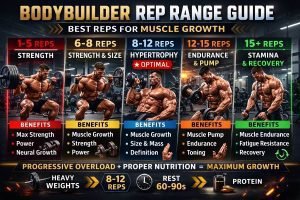
Rep ranges are often grouped into three general categories.
Low Rep Range (1–5 Reps)
Low repetition sets usually involve lifting heavier weights.
Athletes performing sets in this range often focus on strength development and power. Exercises such as squats, deadlifts, and bench presses are commonly performed in lower rep ranges when strength is the primary goal.
Because heavier weights are used, longer rest periods between sets are typically required.
Moderate Rep Range (6–12 Reps)
The moderate rep range is frequently associated with bodybuilding-style training.
Many athletes use this range because it allows them to lift challenging weights while maintaining control and time under tension.
This range often provides a balance between weight load and training volume, which makes it a common choice for muscle-building routines.
Many bodybuilding workouts include 3–5 sets of 6–12 repetitions per exercise.
Higher Rep Range (12–20+ Reps)
Higher rep ranges involve lighter weights and longer sets.
Athletes may use these ranges to increase muscular endurance and enhance the muscle pump sensation during workouts.
Higher rep sets can also increase time under tension and contribute to workout variety.
Bodybuilders often include higher rep sets at the end of workouts to fully engage targeted muscle groups.
Why Rep Ranges Matter for Muscle Training
The number of repetitions performed during each set influences several important training variables.
Training Intensity
Rep ranges determine how heavy the weight is relative to an athlete’s strength level.
Lower reps typically involve heavier weights, while higher reps allow athletes to use lighter loads for longer sets.
Training Volume
Volume refers to the total amount of work performed during a workout. It can be calculated as:
Sets × Reps × Weight
Rep ranges directly influence training volume because they determine how many repetitions are completed.
Time Under Tension
Time under tension refers to how long muscles remain engaged during a set.
Longer sets increase the amount of time muscles remain under tension, which can influence how muscles respond to resistance training.
The Role of Progressive Overload
Regardless of the rep range used, one of the most important principles in strength training is progressive overload.
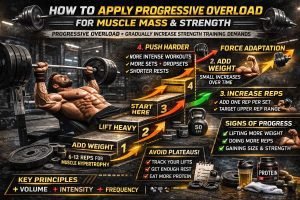
Progressive overload involves gradually increasing the demands placed on muscles over time.
This can be achieved by:
Increasing the weight lifted
Performing more repetitions
Adding additional sets
Improving exercise technique
Reducing rest periods between sets
As muscles adapt to previous workouts, increasing training demands encourages the body to continue adapting.
Progressive overload is widely considered one of the most important factors in long-term strength and muscle development.
Combining Different Rep Ranges
Many experienced athletes do not rely on a single rep range exclusively.
Instead, they combine multiple rep ranges within their training programs.
For example, a workout routine may include:
Lower rep compound lifts for strength development
Moderate rep sets for hypertrophy-focused training
Higher rep isolation exercises for muscle engagement
This combination allows athletes to stimulate muscles in different ways during a single workout.
For example:
Chest Workout Example
Bench press: 4 sets of 5 reps
Incline dumbbell press: 3 sets of 8–10 reps
Cable fly: 3 sets of 12–15 reps
This approach balances strength development, training volume, and muscle engagement.
Compound vs Isolation Exercises
Rep ranges are often influenced by the type of exercise being performed.
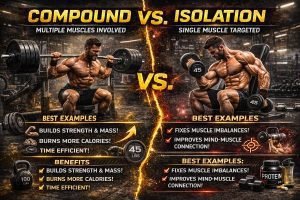
Compound Exercises
Compound movements involve multiple joints and muscle groups working together.
Examples include:
Squats
Deadlifts
Bench presses
Rows
Pull-ups
Because these exercises involve heavier loads, athletes often perform them in lower to moderate rep ranges.
Isolation Exercises
Isolation exercises focus on a single muscle group.
Examples include:
Biceps curls
Triceps pushdowns
Leg extensions
Lateral raises
These exercises are commonly performed with moderate to higher rep ranges to maintain control and maximize muscle engagement.
Training Frequency and Rep Ranges
Training frequency also influences how rep ranges are used in workout programs.
Some athletes follow split routines, training different muscle groups on different days.
Others prefer full-body routines several times per week.
Adjusting rep ranges can help balance training intensity across these schedules.
For example, an athlete training chest twice per week may perform heavier sets earlier in the week and higher rep sets later in the week.
This variation helps maintain training variety and prevents workouts from becoming repetitive.
The Importance of Recovery
Muscle development occurs when muscles adapt to the stress placed on them during workouts.
Recovery allows the body to restore energy levels and prepare for future training sessions.
Important recovery habits include:
Getting adequate sleep
Maintaining balanced nutrition
Staying hydrated
Allowing rest days between intense workouts
Athletes who prioritize recovery often maintain more consistent training routines.
Nutrition and Muscle Training
Balanced nutrition supports workout performance and recovery.
Athletes often include a variety of nutrient-dense foods in their diets, such as:
Protein sources that support muscle maintenance
Carbohydrates that provide workout energy
Healthy fats that contribute to overall nutrition
Hydration also plays an important role in training performance. Water supports circulation and helps maintain normal physical function during exercise.
Sports Nutrition and Rep-Based Training
Some athletes incorporate sports nutrition products as part of their training preparation.
Certain ingredients are commonly included in formulas used by bodybuilders and strength athletes, such as:
L-citrulline
Creatine
Beta-alanine
Electrolytes
Nitrate-containing plant extracts
These ingredients are often used in products designed for athletes engaged in pump-focused workouts and high-volume training sessions.
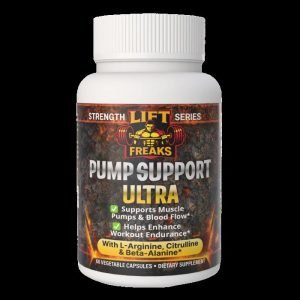
For example, some athletes include products such as Pump Support Ultra before training sessions to complement moderate to higher rep workouts that focus on muscle pumps and workout intensity.
Building Your Ideal Rep Range Strategy
The best rep range for muscle growth depends on several factors, including training experience, exercise selection, and personal goals.
Many successful training programs include a combination of rep ranges to provide balanced stimulation for muscles.
A well-rounded workout routine may include:
Lower rep compound lifts
Moderate rep hypertrophy training
Higher rep isolation exercises
Combining these approaches allows athletes to challenge their muscles in multiple ways.
Over time, consistency, progressive overload, and structured workouts remain the most important elements of successful training programs.
Final Thoughts
Rep ranges play an important role in resistance training programs and influence how muscles respond to exercise.
While moderate rep ranges are commonly associated with bodybuilding-style workouts, combining different rep ranges within a training program can help stimulate muscles effectively.
Lower rep ranges emphasize strength development, moderate ranges balance weight and volume, and higher rep ranges increase time under tension and muscle engagement.
When combined with proper nutrition, hydration, recovery, and structured training programs, these strategies help athletes maintain consistent progress toward their fitness goals.
Understanding how rep ranges influence workouts allows athletes to train with greater purpose and confidence in the gym.
References
Schoenfeld, B. (2010). The mechanisms of muscle hypertrophy and their application to resistance training. Journal of Strength and Conditioning Research.
American College of Sports Medicine. Resistance Training Guidelines.
Wackerhage, H., et al. (2019). Stimuli and sensors that initiate skeletal muscle hypertrophy. Sports Medicine.
Morton, R. W., et al. (2019). Resistance training volume enhances muscle hypertrophy. Medicine & Science in Sports & Exercise.
Phillips, S. M. (2014). Exercise and muscular adaptations. Sports Medicine.
National Strength and Conditioning Association. Essentials of Strength Training and Conditioning.
Common Questions (FAQ)
What rep range is best for muscle growth?
Many bodybuilding programs use moderate rep ranges between 6 and 12 repetitions per set, although combining multiple rep ranges can be effective.
Can higher reps build muscle?
Yes. Higher rep sets can increase time under tension and muscle engagement, which can complement strength-focused workouts.
Are lower reps only for strength training?
Lower rep ranges are commonly used for strength development, but they can also play a role in balanced training programs.
Should beginners focus on one rep range?
Beginners often start with moderate rep ranges while learning proper exercise technique before experimenting with different ranges.
How many sets should I perform for muscle growth?
Many workouts include 3–5 sets per exercise, depending on the exercise and training intensity.
Do supplements influence rep-based workouts?
Some athletes include sports nutrition supplements in their training routines to complement workout preparation and performance.